The relief boat was late. The Hesperus, the Northern Lighthouse Board's tender, had been due at the Flannan Isles in the days before Christmas 1900, but the weather off the west of Scotland kept her in harbour. When she finally anchored off Eilean Mòr on 26 December, nobody came down to the landing. There was no flag on the staff, and the empty provision boxes that keepers normally left out for collection weren't there either.
The crew sounded the whistle and fired a rocket. Nothing. So Joseph Moore, the keeper who was meant to be starting his shift, went up the steps alone.
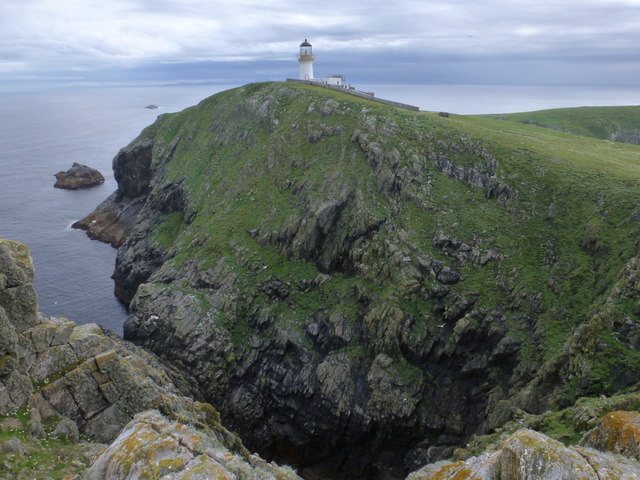
The lighthouse was barely a year old, built on the largest of a cluster of rocky islands about 20 miles west of Lewis and first lit in December 1899. Three men should have been inside: James Ducat, the principal keeper, Thomas Marshall, his assistant, and Donald MacArthur, an occasional keeper filling in for a colleague on sick leave. Moore found the gate and the door shut, the kitchen fire out, the clock stopped and the beds empty. The men were gone, and they were never found.
What Moore actually found
It is worth being strict about this part, because most retellings aren't. The surviving reports describe a station that looked ordinary, not one abandoned in the middle of a meal. Two sets of oilskins and sea boots were missing. The third set, MacArthur's, was still on its peg, which suggests he went outside in his ordinary clothes. That one detail has carried an awful lot of theorising in the years since.
Moore and a couple of the boat's crew searched the island and found no one. The Hesperus left Moore and three volunteers to keep the light going and returned to Lewis with the news. A telegram went to the board in Edinburgh, and the superintendent, Robert Muirhead, came out a few days later to investigate.
There was one more early clue. A steamer, the Archtor, had passed the islands on the night of 15 December and her crew noticed the light was not burning. That fits with the last entries the keepers made on their slate, which ran up to the morning of the 15th. Whatever happened, it most likely happened that day.
The damage at the west landing
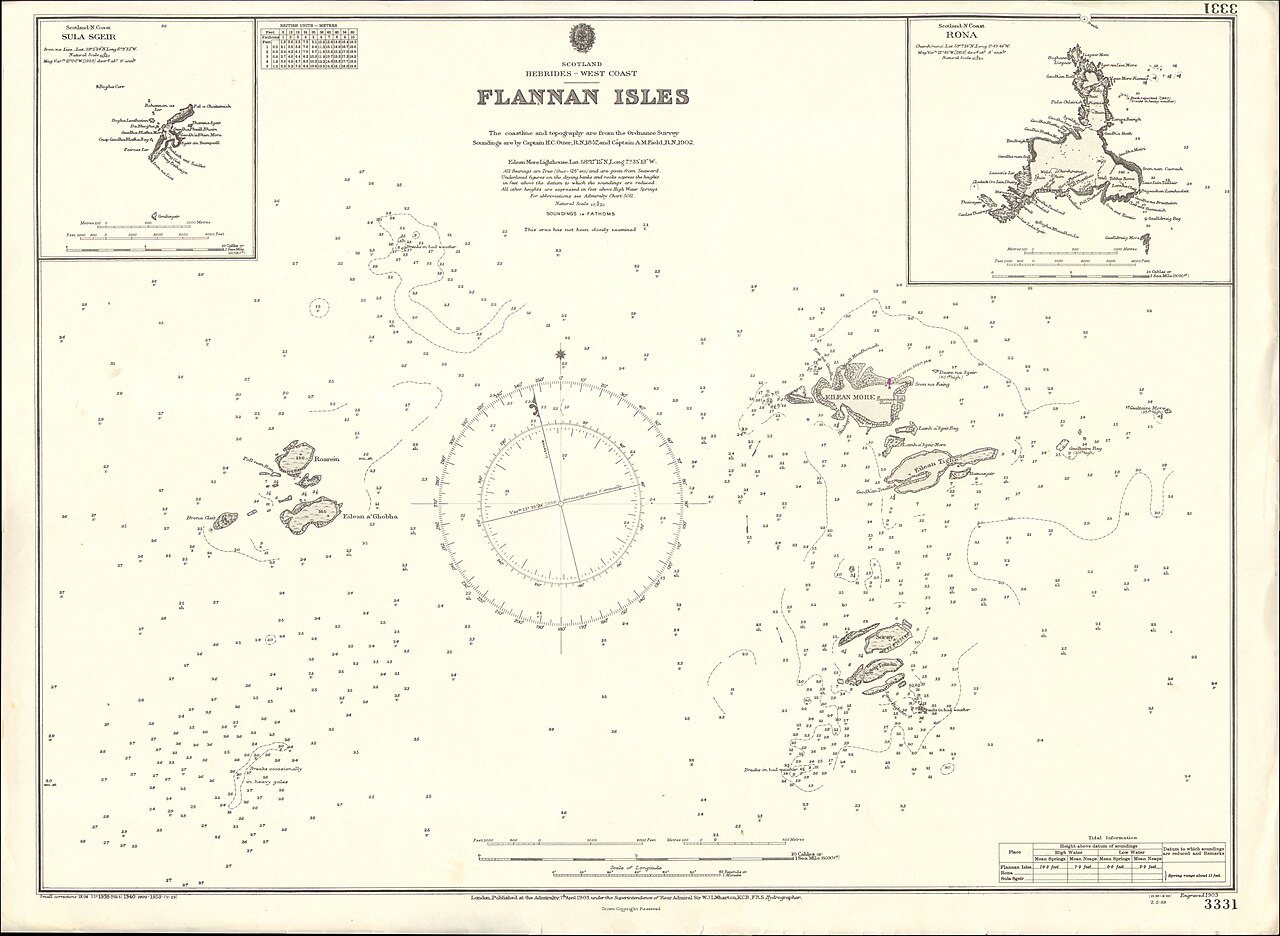
Admiralty chart of the Flannan Isles published in 1903, showing Eilean Mor and the surrounding islets. Credit: United Kingdom Hydrographic Office, public domain, via Wikimedia Commons
The station had two landings, one on the east side of the island and one on the west, so that a boat could get in whichever way the wind was blowing. Muirhead went to the west landing and found it badly knocked about. A box of ropes and crane gear normally kept in a crevice about 110 feet above sea level was gone. Iron railings were bent out of shape. Turf had been ripped away much higher up the cliff, around the 200-foot mark.
From that, Muirhead built the explanation the board accepted. He thought Ducat and Marshall had gone down to the west landing to secure equipment during a spell of heavy weather and had been caught by an unusually large sea, which swept them off the rocks. It is a sober conclusion and, to my mind, the most likely one. The Flannans sit out in the open Atlantic, and big swells there can run far higher up a cliff than anyone standing on it would expect.
The question nobody can answer
What Muirhead could not explain was MacArthur. Lighthouse rules said the light should not be left unattended, so why would the third man leave the station, without his oilskins, and follow the other two?
The most popular answer is that he saw something from above (a wave building, perhaps, or the other two in trouble) and ran down to warn or help them, only to be caught himself. Nobody can prove it. Other writers have suggested a quarrel, an accident on the stairs of the landing, or one man falling and the others going in after him. None of these has any evidence behind it beyond the fact that three people are missing and the sea is right there.
I find the rogue-wave explanation more convincing than any of the alternatives, but I'd be lying if I said it closes the case. It explains the damage. It does not quite explain the empty peg.
How the legend outgrew the facts
In 1912 the poet Wilfrid Wilson Gibson published "Flannan Isle", a ballad about the disappearance. It is a good, eerie poem, and it added details that appear nowhere in the official papers, including an untouched meal on the table and an overturned chair. Those images stuck so firmly that many people now assume they were in Moore's account.
Later magazine writers went further and produced dramatic logbook entries describing a terrible storm, a keeper weeping and the men praying. The researcher Mike Dash, who went back to the Northern Lighthouse Board's records in the late 1990s, found no trace of such entries. As far as anyone can tell they were invented, decades after the event, to make a good story better. Sea serpents, foreign spies and a giant bird have all been suggested since, which tells you more about the people telling the story than about the island.
The disappearance has kept attracting artists. Peter Maxwell Davies based his chamber opera The Lighthouse (1980) on it, and the 2018 thriller The Vanishing turned it into a crime story about a chest of gold, which is pure invention.
Reading the story today
The Flannan Isles light still works. It was automated in 1971, so nobody lives on Eilean Mòr anymore, and the islands are mostly left to seabirds and seals.
If you come across a version of this mystery online, there is a quick way to sort the record from the embroidery. Moore's findings, the Archtor sighting, the missing oilskins and the damage at the west landing all come from the original reports. The half-eaten dinner, the overturned chair and the tearful log entries do not. Once you strip those away you are left with something smaller and sadder: three working men on a remote rock in winter, a sea that could reach 200 feet up a cliff, and one coat left hanging by the door.
Enjoyed this story?Get a new one every day on social.