Photo: BrokenSphere, CC BY-SA 3.0, via Wikimedia Commons
The first issue of Rolling Stone is dated November 9, 1967. It cost 25 cents, it was printed on newsprint, and the cover showed John Lennon in an army uniform, a still from Richard Lester's film How I Won the War. Inside was a fortnightly paper put together in a loft above a print shop in San Francisco by a 21-year-old dropout and a jazz critic more than twice his age.
The printer ran off about 40,000 copies. Roughly 6,000 sold. If you have ever started anything on a shoestring, that ratio may be oddly comforting.
Fifty-nine years on, the magazine has outlived most of the bands it first wrote about. It has also moved coasts, shrunk its pages and changed owners, and I'll admit up front that I'm not neutral about any of that.
A dropout, a critic and $7,500
Jann Wenner had left the University of California, Berkeley, and was writing about music when he went looking for a partner. He found Ralph J. Gleason, who reviewed jazz and pop for the San Francisco Chronicle and had been taking rock seriously at a time when most newspaper critics treated it as a passing noise. Gleason gave the project credibility, and Wenner supplied the drive.
The money was about $7,500, much of it borrowed from family, including the family of Jane Schindelheim, who would later marry Wenner. That was enough to print a first run and not much more. The office was a loft, and the paper looked like a cross between an underground weekly and a trade sheet, which is roughly what it was trying to be.
Why it was called Rolling Stone
Wenner explained the name in that first issue. He traced it back through the old proverb about a rolling stone gathering no moss, to the Muddy Waters song "Rollin' Stone," to the band that had named itself after the song, and to "Like a Rolling Stone," which Wenner described as Dylan's first rock and roll record. In other words, the title was a little family tree of the music the paper meant to cover.
It also helped that nobody could mistake it for a teen fan magazine. That was the point. The early Rolling Stone wanted to write about musicians the way serious papers wrote about politicians or novelists, with long interviews, record reviews that could be rude, and reporting on the business side that the fan press never touched.
Roach clips and long interviews
The early issues were scrappy. The paper famously offered a free roach clip with a subscription, which tells you plenty about who the readers were in 1968. (Try pitching that to a marketing department now.)
The long interview became the house specialty, and it set Rolling Stone apart from the teen magazines on the same racks. Musicians talked for pages at a time, often about things other than music. The paper kept growing, and by the early 1970s it was covering politics and culture as well as records.
Gonzo in two parts
In November 1971 the magazine ran Hunter S. Thompson's "Fear and Loathing in Las Vegas" across two issues, with illustrations by Ralph Steadman. Thompson had already been writing for Wenner, and the Las Vegas piece became the best-known example of what people started calling gonzo journalism. Whatever you think of Thompson (my own view changes depending on which page I open to), it is hard to picture another American magazine of the time printing it.
Around the same years a teenager named Cameron Crowe was filing music stories for the magazine. He later turned that experience into the 2000 film Almost Famous. And Annie Leibovitz, who started shooting for Rolling Stone in 1970, became its chief photographer in 1973. Her portrait of John Lennon and Yoko Ono, taken on December 8, 1980, the day Lennon was killed, ran on the cover in January 1981. If you ask me, it's still the picture most people see in their heads when you say the magazine's name.
A hit song about the cover
By 1972 the paper was famous enough to be teased in a pop song. Shel Silverstein wrote "The Cover of 'Rolling Stone'" for Dr. Hook & the Medicine Show, a band that sang about wanting to see their pictures on that cover. The single went into the top ten in 1973, and the magazine played along by putting the band on its cover that March, as a caricature. I like the magazine more for that than for some of its more solemn covers.
New York, smaller pages, new owners
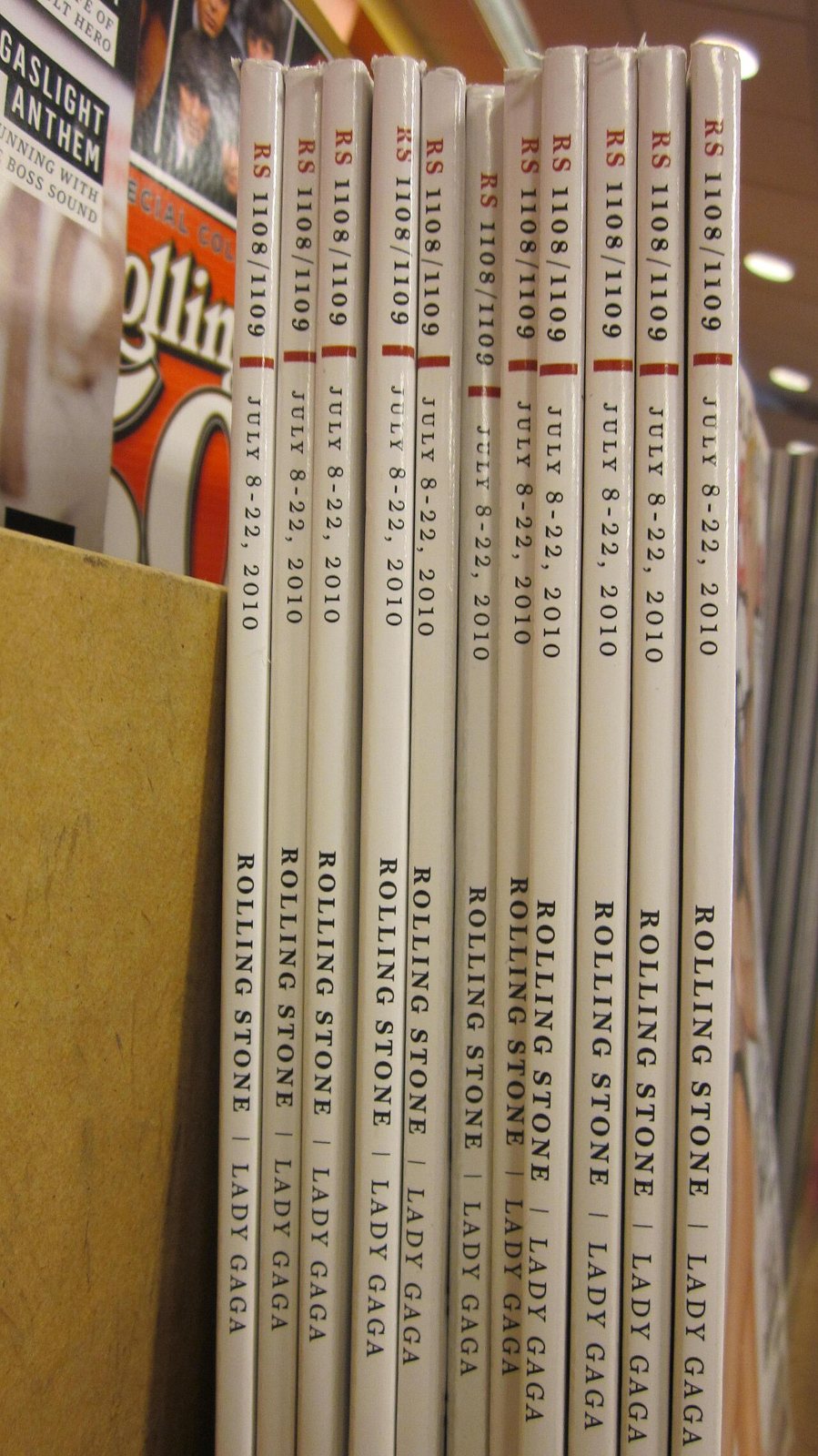
Rolling Stone moved its headquarters from San Francisco to New York in 1977. Gleason did not live to see it; he died in 1975. In 2008 the big newsprint-sized pages gave way to a standard magazine format, and the old feeling of unfolding the thing on a kitchen table went with them.
Ownership changed too. Penske Media took a majority stake in 2017 and later bought the rest, ending the Wenner family's control. Plenty of readers now get it on a phone, which would have taken some explaining in that loft in 1967.
If you've got old issues in a box
Before you list anything, check the date and the condition. Early issues were printed on cheap newsprint that yellows and tears, and a copy with its cover intact and no water damage is a different item from one that spent forty years under a leaky window. Reproductions of famous early issues do turn up, so compare the paper and printing against a known original before you get excited.
For prices, look at recently sold listings rather than asking prices, because those vary wildly and plenty of sellers are guessing. And if you only want to read the old stuff, the magazine released a digital archive of its first forty years back in 2007, so you can browse those early issues without unfolding a single brittle page. I'd still rather hold the paper, but I can see why most people won't bother.
Enjoyed this story?Get a new one every day on social.